Warranties
Roof Patch (5 Temporary Fixes That Actually Work)
When a storm tears through or an old shingle finally gives out, waiting weeks for a full repair is not always an option. A roof patch done correctly can stop water from getting in, protect your home’s interior, and buy you the time you need to plan the right permanent solution. If you are already thinking ahead about what the long-term fix looks like, that is exactly the right instinct. Homeowners in Wesley Chapel, NC and surrounding areas know how fast a small leak can turn into a big problem, and a solid temporary fix makes all the difference.
Here is what you will learn in this guide:
- When a roof patch is the right call and when it is not enough
- The five temporary fixes that hold up best until permanent repairs can happen
- What materials work and which ones fail faster than most homeowners expect
- How to patch a roof safely without making the damage worse
- When it is time to stop patching and call in a professional
When a Roof Patch Makes Sense After Storm Damage
A temporary roof patch is not a permanent solution, but that does not mean it is the wrong move. In the right circumstances, a well-executed patch protects your home for days, weeks, or even months while you arrange professional repairs, wait out a busy storm season backlog, or work through an insurance claim. The key is knowing when patching is appropriate and when the damage is already beyond what a temporary fix can handle.
Here is when a temporary patch earns its place:
- After sudden storm damage: Wind, hail, and falling debris can create openings overnight. A quick patch stops water from getting in while you document damage and file a claim.
- When repairs cannot happen immediately: Contractors get booked out after major weather events. A proper temporary fix protects your home during that gap without creating new problems.
- To protect interior finishes and structure: Every hour a roof is open to the elements, water works its way deeper. A patch that stops the intrusion prevents damage to insulation, drywall, and framing that multiplies the final repair cost.
- To support the insurance claims process: Homeowners are typically required to take reasonable steps to prevent further damage after a storm. A documented temporary patch demonstrates that responsibility and protects your claim.
- As a bridge during winter or wet seasons: Scheduling a full repair during extended wet weather is difficult and often inadvisable. A solid temporary fix can hold through a stretch of bad weather until conditions allow proper work.
Where patching is not appropriate: when the roof deck itself is compromised, when multiple sections are failing simultaneously, when the structure shows signs of sagging or rot, or when the damage is the result of long-term neglect rather than a sudden event. In those cases, a patch delays the inevitable and can give a false sense of security while the underlying problem continues to worsen.
5 Temporary Fixes That Actually Work
Not all temporary patches are created equal. Some hold for a season. Others fail in the next rain. Homeowners in Wesley Chapel, NC and surrounding areas who have dealt with storm damage know that the method and the materials both matter. Here are the five approaches that consistently perform when they are done correctly.
1. Tarp and Batten Installation
A heavy-duty polyethylene tarp secured with wooden battens is the most reliable temporary fix for a large area of missing or severely damaged shingles. When done right, a tarped roof can hold through multiple rain events and even moderate wind.
Key steps for a tarp that actually holds:
- Use a tarp that extends at least four feet past every edge of the damaged area
- Run battens across the tarp and secure them to the roof deck with screws, not nails, to prevent pull-through
- Extend the tarp over the ridge if the damage is near the peak to prevent water from running underneath
- Avoid stapling the tarp directly to the shingles without battens, since it will pull free in any significant wind
A tarp installed carelessly, with edges flapping or inadequately secured, causes as much damage as it prevents and may be cited by an insurance adjuster as inadequate mitigation.
2. Asphalt Roof Patch: Roof Cement and Replacement Shingles

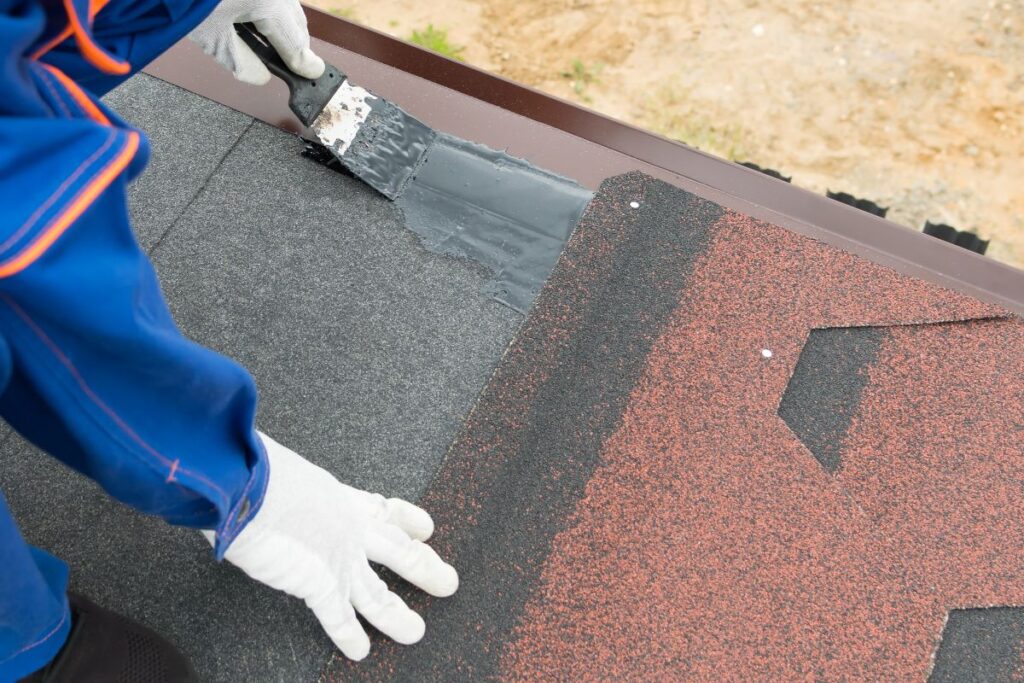
For localized damage involving a small number of missing or cracked shingles, replacing them temporarily with matching or close-matching shingles and sealing the edges with roof cement is a clean and effective fix. This approach works best when the damage is contained and the surrounding shingles are in reasonable condition.
What to keep in mind:
- Use asphalt roof cement, not general-purpose caulk or silicone, which does not bond properly to roofing materials
- Slide the replacement shingle under the overlapping course above and nail it in place before applying cement at the seams
- Apply cement generously along all exposed edges and any nail heads
- This fix can last through an entire season if the materials are matched reasonably well and the application is thorough
This is not a method for large areas. If more than three or four shingles are affected in one section, a tarp is the more practical temporary approach.
3. Roofing Tape and Peel-and-Stick Membrane
Self-adhesive roofing tape and peel-and-stick membrane products have improved significantly in recent years and can provide a reliable temporary seal for cracks, gaps around flashing, and areas where a shingle has cracked rather than gone missing entirely.
These products work best when:
- The surface is clean and dry before application
- The tape or membrane extends at least three inches beyond the damaged area in every direction
- Temperature is above 40 degrees Fahrenheit at the time of application, since adhesion fails in cold conditions
- The damaged area is flat or low-slope rather than steeply pitched
Roofing tape is particularly effective for sealing around flashing, pipe boots, and penetrations where water is entering at a joint rather than through a missing shingle.
4. Caulk and Sealant for Small Gaps and Cracks
For very minor damage, including small cracks in a single shingle, gaps where flashing has pulled slightly away from a surface, or minor separations at a joint, roofing-grade caulk or sealant can provide a quick and effective temporary seal.
Use only sealants rated for roofing applications. Standard silicone and general construction caulk do not hold up to UV exposure and temperature cycling the way roofing-specific products do.
This approach is appropriate for:
- Hairline cracks in otherwise intact shingles
- Small gaps at flashing transitions
- Exposed nail heads that have backed out
- Minor separations at ridge cap joints
It is not appropriate for areas where shingles are missing, where the gap is larger than a quarter inch, or where water is actively pooling during rain.
5. Plywood and Roofing Felt Overlay
When a section of the roof deck itself is damaged or exposed, covering it with a sheet of plywood secured to the framing and topped with a layer of roofing felt provides a structurally sound temporary fix that holds far better than a tarp alone.
This approach is more involved but appropriate when:
- Sheathing is visibly cracked, soft, or has a hole from impact
- A large area of shingles has been stripped by wind
- The existing deck is no longer capable of holding a tarp securely
The plywood should be screwed rather than nailed for easier removal during the permanent repair, and the felt should be overlapped and stapled generously to shed water. This is the most durable temporary fix available and in many cases holds cleanly for several months.
What to Avoid When Patching a Roof
Temporary fixes fail most often not because the damage was too severe but because common mistakes were made during the patch itself. Homeowners in Wesley Chapel, NC and surrounding areas who have attempted DIY patches have seen firsthand how quickly a poorly executed fix becomes a second problem on top of the first.
Using the wrong materials: General-purpose caulk, duct tape, and spray foam are not roofing materials. They break down quickly under UV exposure and temperature swings, often failing within days. Always use products rated specifically for roofing applications.
Patching over wet or dirty surfaces: Adhesion fails on wet, dirty, or dusty surfaces. Before applying any tape, cement, or membrane, the area needs to be as clean and dry as conditions allow. A patch applied over a wet surface may appear to hold initially but will lift at the edges as soon as temperatures change.
Not extending the patch far enough: A patch that barely covers the damaged area leaves the edges exposed to wind and water. Every temporary fix should extend well beyond the visible damage on all sides.
Working on a wet or icy roof without proper safety measures: Safety is not optional. If the roof is wet, steep, or icy, the temporary fix is not worth a fall. Know your limits and call a professional when conditions are not safe for DIY work.
Assuming the patch addresses the underlying cause: A roof patch stops water from entering through a specific opening. It does not fix the cause of the damage. A missing shingle replaced temporarily still has a weakened area around it. Flashing sealed with tape still has an underlying attachment issue. The patch buys time. The professional repair addresses the root problem.
How To Know When the Patch Is No Longer Enough
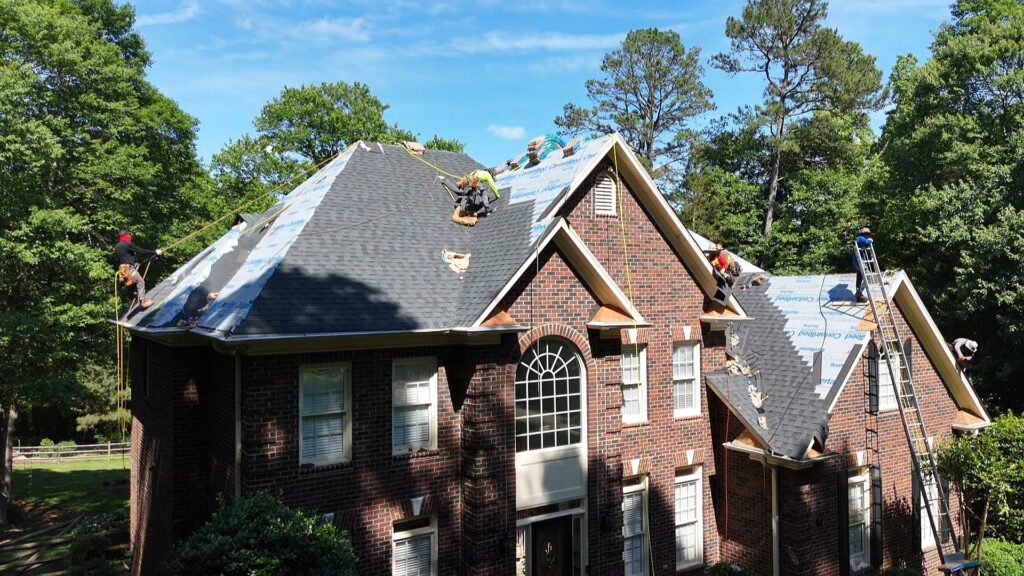
A temporary fix has a shelf life, and knowing when that shelf life has expired is just as important as knowing how to apply the patch in the first place. Leaving a temporary fix in place beyond its useful life creates the same risk as having no fix at all, sometimes more, because it creates a false sense of security while damage continues underneath.
Signs the Patch Is Failing
- Visible lifting or bubbling at the edges of tape or membrane
- Water stains appearing or expanding on interior ceilings or walls
- The tarp pulling loose at the battens or showing pooling from improper drainage
- A sealant or cement application that has cracked or pulled away from the surface
Signs the Damage Requires More Than a Patch
- Sagging or soft spots on the roof deck visible from above or below
- Multiple areas of damage that cannot be addressed with a single fix
- Water intrusion continuing despite a thorough patching effort
- Structural components like rafters or sheathing showing signs of rot or moisture damage
When any of these signs appear, the temporary fix has done its job, and it is time to move to permanent repairs before the situation worsens.
From Temporary Fix to Permanent Solution
A roof patch is a practical, responsible step when damage happens and a permanent repair cannot happen immediately. Homeowners in Wesley Chapel, NC and surrounding areas who take that step well, using the right materials, covering enough area, and documenting everything, protect their homes and their insurance claims at the same time.
Rock Roofing is here when the temporary fix has run its course. We assess the full extent of the damage, provide honest recommendations, and complete permanent repairs that are built to last through whatever the next storm season brings. No pressure, no upselling, and no guesswork.
When you are ready to move from a patch to a proper repair, contact us today and let Rock Roofing take it from there.