Roofing
Estimates For Roofing (6 Tips To Avoid Overpaying)
Getting estimates for roofing without knowing what to look for is one of the fastest ways to overpay for a project or end up with a contractor who cuts corners once the job starts. A roofing estimate is not just a price. It is a document that reveals how a contractor operates, what they plan to install, and what you will actually receive for your money. If you are starting to explore your options and want to understand what a full project scope typically involves before calling anyone, that knowledge changes every conversation you have afterward. Homeowners in Monroe, NC and surrounding areas navigate this process every year.
Here is what you will learn in this guide:
- Why most homeowners overpay for roofing and how to avoid the most common traps
- Seven specific tips for getting and evaluating roofing estimates accurately
- What a legitimate, detailed estimate should always include
- The questions to ask every contractor before signing anything
- How to compare multiple quotes when they look nothing alike
Why Getting a Roofing Estimate Right Matters More Than Getting It Fast
The pressure to move quickly after a storm or when a roof leak appears pushes many homeowners into accepting the first reasonable-sounding quote they receive. That urgency is exactly what works against them. A roofing project is one of the largest single expenditures most homeowners make, and the difference between a thorough estimate and a vague one can represent thousands of dollars in either direction.
Here is why approaching estimates carefully changes the outcome:
- You gain leverage in negotiation: A homeowner who understands what a fair estimate includes is far better positioned to push back on inflated line items, unnecessary upgrades, or vague descriptions that obscure what is actually being proposed.
- You avoid surprise charges: The most common complaint after a roofing project is unexpected costs that appeared after work began. Those surprises are almost always traceable to something that was excluded from the original estimate rather than genuinely unforeseen.
- You identify quality contractors faster: The way a contractor structures their estimate tells you more about how they operate than anything they say in conversation. Detail and transparency in a quote reflect how the contractor approaches the work itself.
- You make a true comparison: Without understanding what goes into an estimate, comparing three quotes is meaningless because you cannot tell whether you are evaluating equivalent proposals or wildly different scopes of work presented at similar price points.
- You protect yourself legally: A detailed, written estimate that becomes the basis of a signed contract is your primary protection if the finished work does not match what was agreed. Vague estimates produce vague contracts that offer little recourse.
Taking two or three extra days to gather and evaluate estimates properly is one of the highest-value uses of time in any roofing project.
6 Tips To Avoid Overpaying When Comparing Roofing Contractor Estimates
These are the practical steps that separate homeowners who get fair value from their roofing projects from those who look back and realize they paid too much for too little. Homeowners in Monroe, NC and surrounding areas who follow this framework consistently report cleaner projects, fewer surprises, and greater confidence in the contractors they choose.
1. Get at Least Three Written Estimates Based on Roof Size and Roof Pitch
A single estimate gives you a price with no context. Two estimates show you a range. Three or more give you enough data to identify outliers in both directions. The contractor whose estimate comes in significantly below the others is not necessarily the best value. They may be proposing less work, using lower-grade materials, or planning to add costs once the job is underway.
Request estimates from contractors who are actively working in your area and who have completed similar projects. A contractor whose only experience is with basic asphalt replacement may not be the right evaluator for a more complex scope involving a multi-pitch roof, skylights, or flashing replacement throughout.
2. Require Itemized Line Items for Your Roof Replacement, Not a Single Total
A lump-sum estimate with no breakdown is not an estimate. It is a number without accountability. Every legitimate roofing estimate should separate the cost of materials, labor, tear-off and disposal, underlayment specification, flashing scope, and any supplemental items like ventilation updates or deck repairs.
What itemization reveals:
- Whether the contractor is accounting for full tear-off or proposing an overlay
- What material grade and brand is being specified
- Whether new flashing is included or whether existing aged flashing is being reused
- How the contractor is pricing labor relative to the market rate in your area
- What items might surface as additional charges after work begins
If a contractor is unwilling or unable to break down their estimate into components, that is a significant red flag before any work begins.
3. Verify Licensing and Insurance Before Comparing Prices
Two estimates that look similar on paper are not equivalent if one comes from a licensed, insured contractor and the other does not. An unlicensed contractor may offer a lower price, but they expose the homeowner to liability for any injuries on the property, have no accountability mechanism if the work fails, and often cannot pull the permits that most jurisdictions require for roofing work.
Before comparing any prices, confirm:
- A valid contractor’s license for the state where the work will be performed
- Active general liability insurance with limits appropriate for a residential roofing project
- Active workers’ compensation coverage for every person who will work on the roof
- The ability and willingness to pull permits where required
Ask for certificates of insurance directly from the contractor, not from a document the contractor provides themselves. A current certificate is issued by the insurance company and confirms active coverage.
4. Ask What Is Specifically Excluded
The fastest way to understand a low estimate is to ask the contractor to tell you what is not included. Their answer reveals everything the current number does not account for and gives you a clearer picture of what the final cost might actually reach if those excluded items surface during the project.
Common exclusions that become expensive surprises:
- Deck repair or replacement once tear-off exposes damaged sheathing
- Flashing replacement at chimneys, skylights, and wall transitions
- Ventilation updates that are needed but not proposed in the initial scope
- Disposal fees for additional roofing layers discovered during tear-off
- Ice and water shield in valleys and at eaves, which some contractors omit to reduce the quote
A contractor who is transparent about exclusions and provides a per-unit rate for items like deck replacement is demonstrating the kind of integrity that translates to a straightforward project.
5. Understand the Material Specification Before Agreeing to Anything
Two estimates that each propose asphalt shingles can differ significantly in material cost based on the specific product specified. A three-tab shingle, an entry-level architectural shingle, a mid-grade architectural product, and a premium designer shingle all carry different price points, wind ratings, warranties, and lifespans.
Ask each contractor to specify:
- The exact product name and manufacturer for every material component
- The wind speed rating and impact resistance classification of the proposed shingle
- The type and thickness of the underlayment being used
- Whether new drip edge is included along all eaves and rakes
- The warranty terms for both the material and the labor
Comparing these specifications across multiple estimates tells you whether a lower-priced quote is reflecting better efficiency or simply a less robust material package.
6. Watch for Pressure Tactics and Storm Chaser Behavior
Contractors who appear unsolicited after a storm, offer a free inspection that quickly turns into an urgent replacement pitch, or apply pressure to sign on the same day the estimate is presented should be approached with significant caution. These tactics are common in roofing because storm events create conditions where homeowners feel urgency and are more susceptible to making fast decisions.
Signs of pressure-based sales approaches:
- A “today only” price or discount that disappears if you want time to think
- Claims that your insurance will cover everything without reviewing your policy
- Reluctance to provide a written estimate that you can keep and review
- No verifiable local address, no physical presence in the area, or a temporary setup that appears only after major weather events
- Requests for large upfront payments before any material is ordered or delivered
A reputable contractor welcomes your questions, encourages you to compare their estimate, and does not need to create artificial urgency to earn the work.
What a Legitimate Roofing Estimate From Local Roofers Should Always Include
Beyond the tips above, there is a baseline of information that every professionally prepared roofing estimate should contain regardless of the project scope. Homeowners in Monroe, NC and surrounding areas who know this baseline can quickly identify when a proposal falls short before committing to anything.
Required Components of a Complete Estimate
- Company information: The contractor’s full legal name, license number, physical business address, and contact information should appear on every page of the estimate. An estimate with only a name and phone number provides no accountability.
- Project address and scope description: The estimate should clearly identify the property being quoted and describe the full scope of work in specific terms, not in vague phrases like “complete roof replacement” without further detail.
- Material specifications: Every material component should be identified by brand, product name, and relevant specifications including weight, wind rating, and warranty class.
- Labor description: The labor component should describe what is included in the installation scope, whether a full tear-off is included, how many layers will be removed, and what the crew size and projected timeline are.
- Payment schedule: A legitimate estimate outlines when payments are due and for what amounts. A deposit to cover material ordering is standard. Payment in full before work begins is not.
- Signatures and dates: Both parties should sign a final version of the estimate that becomes the basis of the contract, with the date of the estimate and a stated expiration period for the pricing.
Questions To Ask Every Contractor Before Starting Your New Roof
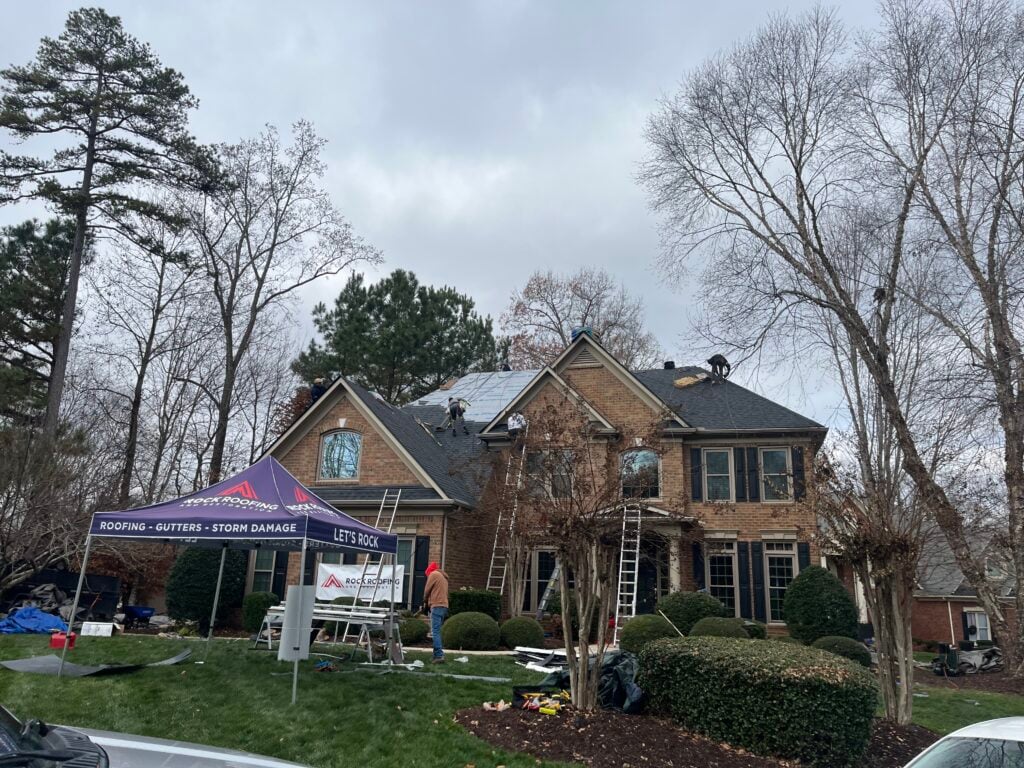
Having the right questions prepared before meeting with contractors is one of the most effective ways to quickly evaluate who deserves serious consideration and who should be passed on.
About Their Experience and Operations
How long has the company been operating under its current name? Do they use their own crew or subcontract the labor? Who will be on-site supervising the project daily? What is their process for handling damage discovered after tear-off begins?
About the Specific Project
Will they pull all required permits before work starts? Will they provide a written project timeline before work begins? What is their policy if weather delays the project? Who is the point of contact for questions during the project?
About the Estimate Itself
What would cause the final cost to exceed the estimate? Is the estimate guaranteed for a specific period? What is the process for authorizing additional work if unexpected issues arise during the project?
Get Estimates That Give You the Full Picture
Estimates for roofing are only useful when you know how to read them. A number without context is just a number. A detailed, itemized proposal from a licensed, insured contractor gives you a foundation for a real decision, a fair comparison, and a contract that protects you through the project. Homeowners in Monroe, NC and surrounding areas who take the time to gather and evaluate estimates properly consistently come out ahead of those who move on price alone.
Rock Roofing provides detailed, transparent estimates that break down every component of the project so you know exactly what you are getting, why it costs what it costs, and what warranty backs the work. No lump sums, no vague descriptions, and no pressure to sign before you are ready.
When you are ready to get roofing estimates that you can actually compare and trust, contact us today and let Rock Roofing show you what a straightforward, honest proposal looks like.